Thursday, January 24, 2013

Church of the Gesù and Sant'Andrea al Quirinale

Church of the Gesù


 Historical and artistical context:

Date of construction: 1568-1584

Style: High Renaissance-Baroque

Artist: Jacopo Vignola and Giacomo della Porta


 Material and technique: Made with polychrome marbel, is a type of church stablished my the Franciscans and Dominicans since the twelve century and its façade is known as "the first truly baroque façade".

Iconographic analysis: 
 
Title: "Chiesa del Gesù" 

Type of builging and function: This church was built according to the new requirments of the Council of Trent. It was the home of the Superior General of the Society of Jesus until the supression of the order in 1773.


Formal analysis: 

Composition, space and decoration: It's composed by a simple nave without aisles, so that the congregation is together and focused on the main altar. With five chapels at one side.


The sacristy is on the right. In the presbytery there is a bust of Cardinal Bellarmine by Bernini. The chapel of St. Ignatius is the masterpiece of the church, designed by Andrea Pozzo and houses the tomb of the saint. 

 
The altar made by Pozzo, shows the Trinity, while four columns made of lapislazuli enclose the colosal statue of the Saint made by Pierre Legros.
 

Meaning: This church represents the counter-reform who was made by the Council of Trento after Lutero's Reform. 

Sant'Andrea al Quirinale

  
Historical and artistical context:

Date of construction: 1658-1670

Style: Baroque

Artist:  Designed by Gian Lorenzo Bernini

  
Material and technique: The main façade has an oval cylindrer who encases the dome and a semicircular porch with two columns which mark the entrance.

Iconographic analysis:

Title: "Sant'Andrea al Quirinale" 

Type of builging and function: Roman catholic titular church built by the Jesuit seminary on the Quirinal Hill.


 Formal analysis:

Composition, space and decoration: Made of four chapels and the main altar this church had many statues and paintings like The Glory of St Francis Xavier by Filippo Bracci.

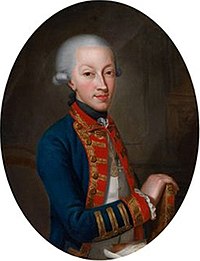
 Between the Chapel St Stanislaus Kostka and the main altar is a side chapel with a large crucifix. It houses the tomb of King Charles Emmanuel IV of Sardinia.
 

Meaning: This church is one of the masterpiece of Bernini, who was an Italian artist and architect. Not the "Ecstasy of St. Theresa" but an important piece of his work. 

It's over! Hope you enjoy with these two masterpieces of Baroque architecture!


Monday, January 21, 2013

Meraviglie di Roma durante il Barocco

Buon giorno! Today, I’m going to show you two of the most wonderful Baroque examples of architecture in Rome. From my point of view, you will like learning more things about this two Italian masterpieces. Enjoy it!


SAN CARLO ALLE QUATTRO FONTANE:


Historical and artistic context:

Date of construction: 1634-1641
Consecrated as Catholic Church: 1646
Style: 17th century Italian Baroque Art.
Artist: Francesco Castelli (known as Francesco Borromini)


Material and technique: The façade of the church is made of bricks covered by a surface of white stucco. It's also got an urban design and a small size which is perfectly combined with the buildings which are next to it. Borromini makes the building dynamic and the walls seem they are in constant movement.

Location: Via del Quirinale, 30. Rome, Italy.


Iconographic analysis:

Name: San Carlo alle Quattre Fontane (also called San Carlino due to its tiny size)
Translation: Saint Charles at the Four Fountains.

Type of building and function: San Carlo alle Quattro Fontane is a Roman Catholic church designed by the Swiss-Italian architect Borromini. Its construction was commissioned by the Spanish Trinitarian Order in Rome, who wanted to have their monastery next to the church. It became a challenge to Borromini create these two structures because of the small amount of space he had to make the church and the monastery together. Nowadays, the monastery has disappeared and the structure is one of the most visited places in Rome.


Baroque characteristics: The façade has got a lot of movement and an inscription in Latin because of its religious part. It express elegance and lots of feelings are revealed when you see the interior part of the church. It's composed by curve shapes, avoiding straight lines. It's also got Corinthian columns that make a small structure a colossal one.

Why it is famous: It is world-known because people get surprised when see its façade and  due to its location and tiny size.


Formal analysis: 

Composition, space and decoration: It's composed by a church and the former monastery. Borromini designed an outstanding dome integrated in a complicated floor plan. There are two altars with an axis position and the author created many secret passages to protect the monks from a fire and to go across the three floors of the structures easily. The building is decorated with images of Catholic Saints and flower and geometrical decorative elements. 

Size of the church: The floor plan is about 720 square meters (The Basilica of St Peter is over 15,200 square meters). The dome is 25.80 meters high and, although it's not very tall, this masterpiece can be observed from three blocks of buildings far.


Meaning: Although it was Borromini's last construction it became his most known creation. It represents Roman Baroque Art perfectly and it was the most famous building of the Spanish Trinitarians. 
From my point of view, the author wanted to express their dark feelings in an everlasting piece of art and it is an example of how an untidy place of emotions can be as beautiful as it is nowadays.


FONTANA DEI QUATTRO FIUMI 
A PIAZZA NAVONA


Historical and artistic context:

Date of construction: 1648-1651
Style: 17th century Italian Baroque Art.
Artist: Gian Lorenzo Bernini.


Material and technique: The base in which plants and animals are shown is made by Roman Travertine and the sculptures are made of marble. Human figures were sculptured in workshops and later they were combined with the other parts of the fountain. It was designed as an outstanding work of art which had to become the central focus of Navona Square.

Location: Piazza Navona, Rome, Italy.
During Roman Time the Stadium of Domitian was located there.


Iconographic analysis: 

Name: Fontana dei Quattro Fuimi.
Translation: Fountain of the Four Rivers. It receives its name because it represents 4 rivers, one river for each of the four continens Europeans knew in that period of time:

Nile: Africa.
Danube: Europe.
Ganges: Asia.
River Plate: America.

Type of building and function: Fontana dei Quattro Fuimi is a fountain located in central Rome built to rise up the importance of Navona Square because their near squares already had fountains and other kinds of structures in its interior. In the centre of the fountain there's an Egyptian obelisk built during Roman Time. Its construction was commissioned by the inhabitants of the square and the Pope Innocenzo X. The first offer as architect of the structure was given to Borromini but finally, Bernini became the actual architect.


Baroque characteristics: The sculptures show a lot of feelings, they loved nature and used animals and plants figures as a decoration. They expressed the colossal and international part of the fountain involving the four continents they knew, the entire world. There are not straight lines and the curve ones produce dynamism and make the statues as they were real.

Why it is famous: It is so important because this creation was sculpted during Bernini's best professional period of time and due to the fact that before its construction and the transportation  of the obelisk, the Square hadn't got the importance it currently has.
It is also world-known because during Roman Time, a Roman circus was located there.


Formal analysis:

Size of the Square: The Square is huge because, as I have already said, during Ancient Time there was a Roman Circus. A main street of Rome crosses it and connect the squares that are next to Piazza Navona. 

Composition, space and decoration: The whole work of art is composed by four main parts (as I mentioned before, 4 rivers for each continent) representing four Gods. Around the main parts, you can find the place in where the water falls and lots of small structures of plants and animals. In the middle of the structure, there's an obelisk that can be seen from their neighbour squares.


Meaning: People living around the square know the importance of the fountain because this touristic attraction make the whole place of one the most visited and photographed streets in Rome. It gave to Bernini his world fame because, although he has better works of art, they didn't become as famous as it so early. It's a good example of Baroque architecture because emotions are shown and from my point of view, four realities are mixed; the whole world is combined


So, this is all. I hope you have enjoyed my post because I have worked hardly in the process of investigating the information and writing the text. There are some links in which I have used the red color to highlight it and you will find easy to find them because they are underlined too. If you have any doubts, you find any mistake or you can write more information about the two structures, post a comment and I will answer you as quickly as I read them. 

Thanks for reading my post!!

Wednesday, December 26, 2012

Art Analysis: St. Peter's Square

Historical and artistic context
  • Time: 1656-1657
  • Style: 17th century Baroque Art
  • Artist: Bernini, Gian Lorenzo (1598-1680)
  • Material and technique: Marble. Open, dynamic arquitecture, well integrated in its urban environment
  • Location: Vatican City, Rome (Italy)
Iconographic analysis
  • Name: Colonnade in St. Peter's Square
  • Type of building and function: The open basilica was designed by Bernini as an appropriate forecourt, designed so that the greatest number of people could see the Pope give his blessing, either from the middle of the façade of the church or from a window in the Vatican Palace. The project also aimed at highlighting Michelangelo's Dome.
Formal analysis
  • Compostion, space, decoration: square framed by two straight and slightly converging arms that open in an elliptical square. Tuscan colonnades, four columns deep, originating three passages, the central one being wider. Columns are 15m tall. Entablature with balustrade (horizontal axis) which is crowned by 140 statues (vertical axis). The freestanding columns show a marked architectural chiaroscuro. Awe effect after crossing the colonnade and facing the square's magnificence.
  • Size of the square: 340m - 240m. At the centre of the square, flanked by fountains, stands a 25m tall obelisk, surmounted by a cross, reaching 40m in total.
Meaning
  • Michelangelo's Dome represents the head of the Church. The elliptical center of the piazza encloses the visitor with the "maternal arms of Mother Church" in Bernini's expression.

Sunday, December 16, 2012

TURKEY

Turkey is an Eurasian country located mostly on the Anatolian Peninsula in Western Asia and on East Thrace in Southeastern Europe.
Turkey is bordered by eight countries.


 Turkey is one of the seven independent Turkic state. The country's official language is Turkish which is spoken by approximately 85% of the population as mother tongue.Its capital is Ankara but its larges city is Istambul.


 Hagia Shopia  is a former Orthodox patriarchal basilica, later a mosque, and now, is a museum in Istanbul in Turkey. Its a good place to visit.


Other place to visit is the Library of Celsus which is ancient Roman buildin in Ephesus,part of Selcuk.It was buil in honor of the Roman Senator Tiberuis Julius Celsus. It's s honored  as a Greek and a Roman on the librar.


Saturday, December 15, 2012

ICELAND

Iceland is a Nordic European island country situated at the confluence of the North Atlantic and Arctic Oceans.The country has a population of about 320.000 and a total area of 103.000 km. The capital is Reykjavík which is also the largest city.


Iceland is volcanically and geologically active. The interior consists mainly of a plateau characterised by sand, lava fields, mountains and glaciers. It has also many geysers. It has a temperate climate despite a high latitude just outside the Arctic Circle.


Iceland's cuisine is based on fish, lamb and dairy products. Fruits and vegetables aren't generally a component of traditional dishes due to the climate. Breakfast usually consists of pancakes, cereal, fruit, and coffee. The main meal is dinner, which usually involves fish or lamb. Coffee is very popular in Iceland. It's drunk at breakfast, after meals and in mid-afternoon. Coca-cola is also popular.


Here, you have a video where you can see all the beauties of Iceland.


-What things do you like about Iceland?


Friday, December 14, 2012

FRANCE !


France is a unitary semi-presidential republic located mostly in Western Europe, with several overseas regions and territories. France extends from the Mediterranean Sea to the English Channel and the North Sea, and from the Rhine to the Atlantic Ocean.

France is the largest country in Western Europe and the third-largest in Europe as a whole. It possesses the second-largest exclusive economic zone in the world. France has been a major power with strong cultural, economic, military, and politicalinfluence in Europe and around the world.

The name "France" comes from the Latin Francia, which means "country of the Franks". There are various theories as to the origin of the name of the Franks. One is that it is derived from the Proto-Germanic word frankon which translates as javelin or lance as the throwing axe of the Franks was known as a francisca. Another proposed etymology is that in an ancient Germanic language, Frank means free as opposed to slave.

GEOGRAPHY

From southwest to northeast, France shares borders with Spain, Andorra, Monaco, Italy,Switzerland, Germany, Luxembourg, and Belgium. France also borders Suriname to its west and Brazil to its east and south, by way of the overseas region of French Guiana, which is considered an integral part of the republic.

France is divided into 27 administrative regions 22 are in metropolitan France (21 are on the continental part of France; one is the territorial collectivity of Corsica), and five are overseas regions. The regions are further subdivided into 101 departaments. 


AGRICULTURE

France has historically been an important producer of agricultural products. Large tracts of fertile land, the application of modern technology, and EU subsidies have combined to make France the leading agricultural producer and exporter in Europe.

Wheat, poultry, dairy, beef, and pork, as well as an internationally recognized processed foods are the primary French agricultural exports. Rosé wines are primarily consumed within the country, but champagne and Bordeaux wines are major exports, being known worldwide. 

TOURISM

With 79.5 million foreign tourists in 2011, France is ranked as the first tourist destination in the world, ahead of the United States.
France, and especially Paris, have some of the world's largest and renowned museums, including the Louvre, which is the most visited art museum in the world, but also the Musée d'Orsay, mostly devoted to impressionism, and Beaubourg, dedicated to Contemporary art.
Disneyland Paris is France's and indeed Europe's most popular theme park, with 15,405,000 combined visitors to the resort's Disneyland Park and Walt Disney Studios Park in 2009.

FRANCE IS ALSO THE COUNTRY OF THE FASSION

Fashion has been an important industry and cultural export of France since the 17th century, and modern "haute couture" originated in Paris in the 1860s. Today, Paris, along with London, Milan, and New York City, is considered one of the world's fashion capitals, and the city is home or headquarters to many of the premier fashion houses.


We have already been in the capital, Would you like to go again?

**Is this entry there are some linkers about words or other things about France. If you don´t know its mean click in the linkers**


Luxembourg.

It´s located between France, Germany and Belgium it belongs to the European Union. The country has three official languages: German French and Luxembourgish. It is the smallest country in the European Union with 380000 inhabitants. Luxembourg is a parlamentary democracy, and it is a secular state.


This city attracts tourists because Luxembourg has a lot of famous beautifull castles. It´s a luxury country, tourist how have visited the country sais that Luxembourgers people is always drinking beer. Is that a stereotype? perhaps..


1-. Say a typical mail of Luxembourg.
2-. Would you like visit Luxembourg?

Italy


Italy is a unitary parliamentary republic in Southern Europe.The territory of Italy covers some 301,338 km2


Italy endured numerous invasions by foreign peoples, fromGermanic tribes such as the Lombards and Ostrogoths, to the Byzantines and later, the Normans, among others. Centuries later, Italy became the birthplace of Maritime republics and the Renaissance.

Modern Italy is a democratic republic, it is a country of affluence cultural, gastronomic and architectural It is also a member state of the Organisation for Economic Co-operation and Development, theWorld Trade Organization, the Council of Europe, the Western European Union and the United Nations. Italy has the world's ninth-largest defence budget and shares NATO's nuclear weapons.


Prehistory and antiquity

The Ancient peoples of pre-Roman Italy such as the Umbrians, the Latins. Volsci, Samnites, the Celts and the Ligures which inhabited northern Italy, and many others were Indo-European peoples. In the 8th and 7th centuries BC Greek colonies were established all along the coast of Sicily and the southern part of the Italian Peninsula became known as Magna Graecia.

Arquitecture of Italy

Italy has a very broad architectural style and diverse.
Below I'm going to show some pictures of the arquitecture of Italy: